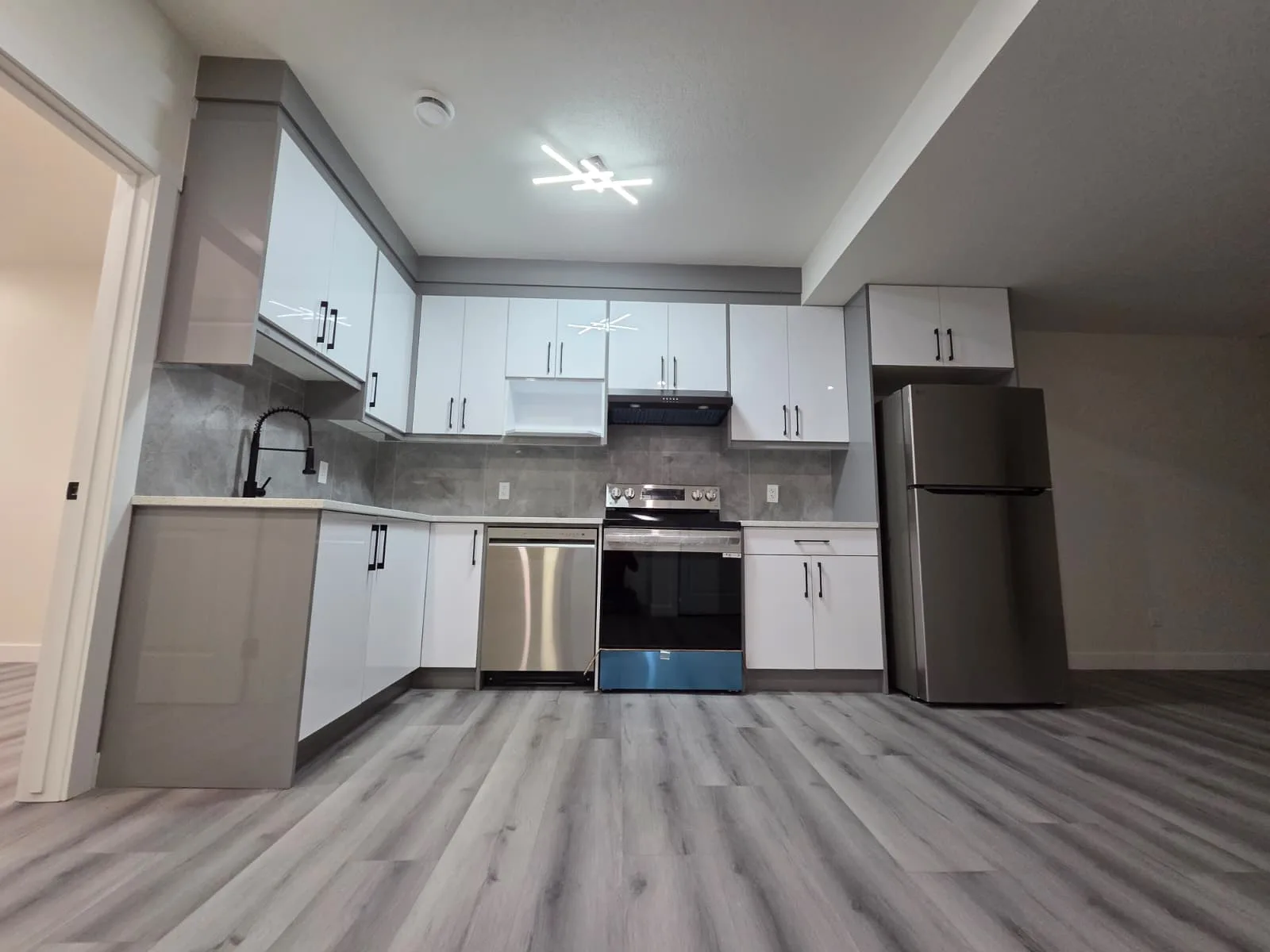
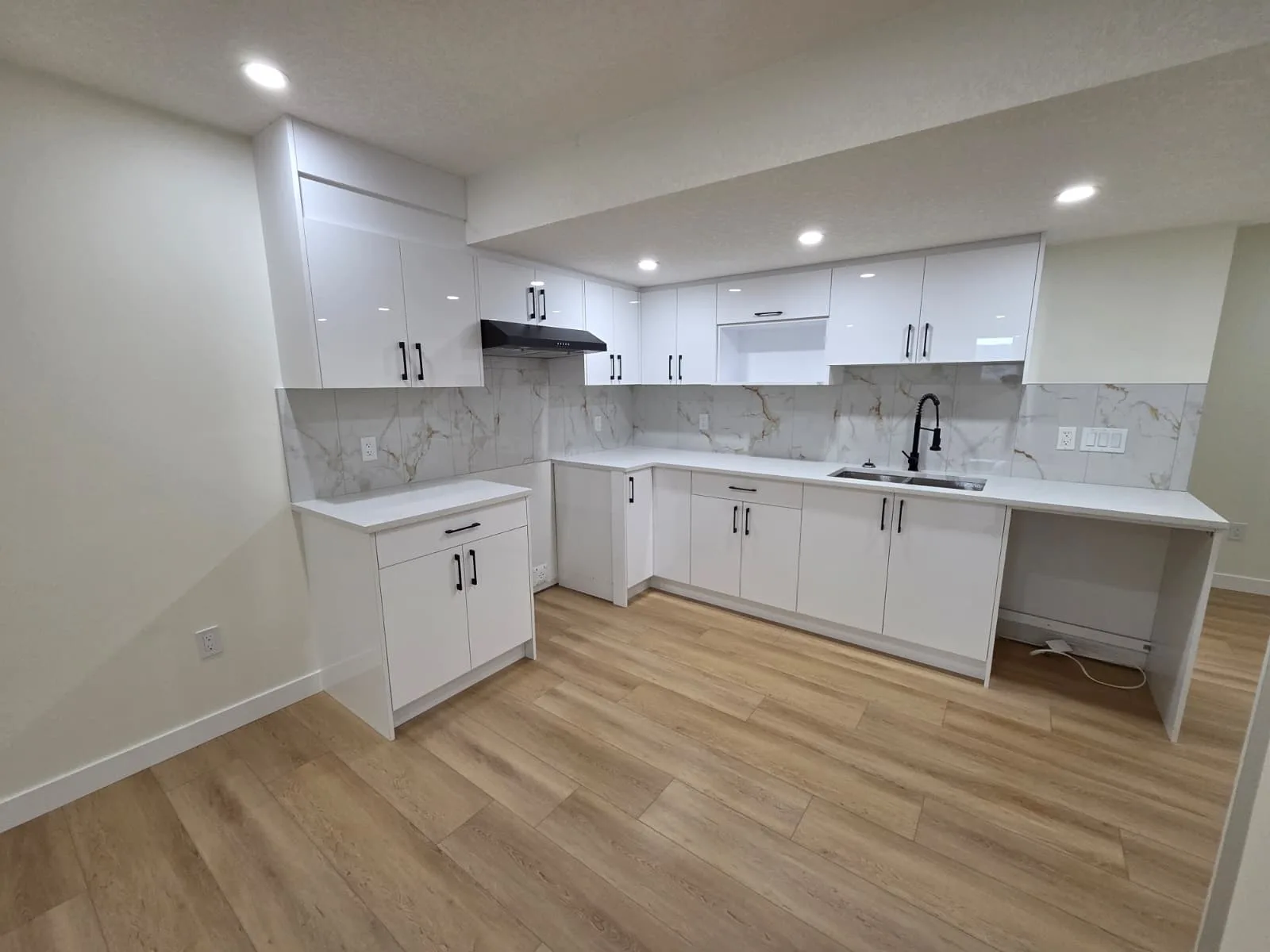
A client called us last spring with a question we hear constantly. "My basement is already finished," he said. "Do I just need a permit to make it legal?" He'd bought the home two years earlier, assumed the suite was registered, and was getting ready to rent it out. Turns out the suite had never been inspected. No fire separation. No egress windows. Nothing close to code. He was looking at a full gut-and-redo before collecting a single dollar in rent. That's not a made-up cautionary tale — we've seen it at least a dozen times in the last five years across Calgary. A calgary legal basement suite isn't just a finished basement with a kitchen. It's a specific, inspected, and registered unit that meets the Alberta Building Code and Calgary's Land Use Bylaw. If your suite doesn't have a registration number on file with The City of Calgary, it's not legal. This guide covers what that actually means for you as a homeowner, what it costs, how the incentive program works, and what the build process actually looks like — based on over 150 completed secondary suites we've built across Calgary and surrounding municipalities.
What "Legal" Actually Means in Calgary
The City of Calgary defines a secondary suite as a self-contained residence within a principal dwelling. Separate kitchen, bathroom, sleeping area, living space, and an entrance that's accessible from outside without passing through the main unit (Avenue Calgary).
That's the definition. The legal part means it's been permitted, inspected, and registered on the city's secondary suite registry.
Why does this matter? A few reasons. An unpermitted suite is a liability. If something goes wrong — fire, injury, flooding — your home insurance can deny the claim entirely. You can't legally charge rent on an unregistered suite. And when you sell, a buyer's lawyer will find the missing registration, and your deal can collapse or get repriced. We've watched that happen to sellers who thought they were completely fine.
The safety requirements exist for real reasons. Egress windows, fire separation, smoke detectors on independent circuits — these aren't bureaucratic box-ticking. They're the difference between a tenant escaping a house fire and not.
The Incentive Program Most Calgary Homeowners Are Missing
The City of Calgary launched its Secondary Suite Incentive Program in June 2024. A surprising number of homeowners still haven't heard about it. That's money sitting on the table.
According to the Calgary Herald, the program provides up to $10,000 for qualifying homeowners to register and build a secondary suite within a main dwelling. It's backed by a one-time $40 million federal grant plus $4 million in annual city funding. As of the Herald's reporting, the program had already paid out or conditionally committed $39 million across roughly 3,200 registrations.
The momentum is real. According to the City of Calgary's 2025 housing delivery report, nearly 6,200 secondary suites were granted occupancy in 2025, a record year. That's up from about 5,000 in 2024 and 3,000 in 2023. Total registered suites in Calgary now exceed 23,500. A decade ago that number was around 1,000 (Avenue Calgary).
A few key details on the incentive:
- Covers suites within the main dwelling only — not backyard or detached suites
- Two-year restriction on short-term rentals (Airbnb, VRBO) after receiving funding
- Suite must pass all city inspections to qualify
- It's a reimbursement model — you pay upfront and claim after completion
Calgary city council also approved new short-term rental rules recently. Primary residence listings now require a $172 annual license, while non-primary residences pay $510 per year (Calgary Herald). If your plan was to build a suite and immediately list it on Airbnb, that window is narrower than it used to be.
What a Calgary Legal Basement Suite Costs in 2025
This is the question everyone asks first. The honest answer is that it depends heavily on what your basement looks like right now.
According to OAF Construction, a Calgary basement builder, most legal suites in the 600-900 square foot range run $75,000 to $140,000 in 2025. Here's how their per-square-foot benchmarks break down:
| Build Type | Cost Per Sq Ft | What's Included |
|---|---|---|
| Basic Legal Suite | $85 - $115/sf | Standard finishes, code-compliant layout, basic fixtures |
| Mid-Range with Upgrades | $120 - $160/sf | Heated floors, soundproofing, upgraded finishes |
| Luxury Build | $175+/sf | Custom millwork, home automation, premium materials |
On top of build cost, mandatory compliance items come with every calgary legal basement suite:
- Egress windows: $1,800 - $3,500 per window, including the egress well
- Fire separation (Type X drywall, smoke-sealed doors): $4,500 - $7,000
- Sound Transmission Class upgrades: $2,000 - $4,000
- City permits and inspections: $2,200 - $3,500
None of these are optional. Every one shows up on the inspection checklist.
Where Homeowners Actually Waste Money
After 150+ completed suites, we've seen the same budget mistakes repeat. Making layout changes after permit submission — every revision adds weeks and fees. Installing high-end finishes in utility rooms nobody ever sees. Skipping a structural or plumbing assessment before breaking ground, then discovering expensive surprises mid-project.
The cheapest suite is the one that goes through permits once. One set of drawings, one permit application, one round of inspections. Changes after that point compound fast.
Does the Investment Make Sense?
Calgary's population sits at roughly 1.6 million people (Calgary Herald), and the city approved over 25,700 homes through building permits in 2025 alone (City of Calgary). Supply is growing. Rental demand is keeping pace.
Cory Markin of Calgary Laneways told Avenue Calgary that a recent client in Ogden spent $150,000 on a laneway suite, watched her property value jump from roughly $500,000 to close to $1 million, and projected a payback period of just over four years. Basement suites cost significantly less than laneways to build. The financial case for a properly built, registered suite generally works in this market. With up to $10,000 available through the incentive program, the gap between cost and return shrinks further.
Is every basement a good candidate? No. Low ceiling height (under 7'6"), serious foundation issues, or a layout that makes a separate entrance difficult — these push costs up or can make a project unviable. The only way to know is to actually look at the space.
The Permit and Build Process, Step by Step
People assume dealing with the city is a nightmare. In our experience, once you know the sequence, it's manageable. (The permit process is the part most contractors underexplain — and then clients are surprised by the timeline.)
Here's what a standard calgary legal basement suite project looks like:
- Pre-application review with a licensed contractor. Zoning, ceiling height, structure, and lot requirements all need to be assessed before any drawings happen.
- Development permit, if required based on zoning.
- Building permit application, including architectural drawings covering layout, egress, fire separation, and mechanical systems.
- Trades permits for electrical, plumbing, and HVAC — these run alongside the building permit.
- Framing inspection before any drywall goes up.
- Rough-in inspection for electrical, plumbing, and HVAC.
- Final inspection and suite registration.
The City has made this process faster than it used to be. According to Avenue Calgary, minimum lot widths dropped from 44 feet to 32 feet, and parking requirements simplified to just one extra stall regardless of bedroom count. Those changes opened up more properties than before.
We're licensed to build in Calgary, Chestermere, Rocky View County, and Airdrie. The permit process varies slightly by municipality. Not harder — just different. If your property is outside Calgary city limits, the steps aren't identical, and working with a contractor who's actually licensed in your municipality matters.
For more detail on the overall development process, read our guide on what to expect during a basement development in Calgary. If you're weighing a basement suite against a backyard suite, our secondary suite vs. backyard suite comparison breaks down the trade-offs clearly. And if you're on the fence about detached options, the detached garage development guide covers that path too.
Frequently Asked Questions
What are the minimum requirements for a legal basement suite in Calgary?
A calgary legal basement suite must be a self-contained unit with its own kitchen, bathroom, sleeping area, living space, and an entrance accessible from outside without passing through the main unit. It must meet the Alberta Building Code, including fire separation between units, egress windows in all sleeping rooms, interconnected smoke and carbon monoxide detectors, and sound transmission requirements. The suite must be permitted through The City of Calgary, pass all required inspections, and be registered on the city's secondary suite registry. The property must also comply with Calgary's Land Use Bylaw, which governs zoning and minimum lot dimensions.
How much does a legal basement suite cost in Calgary in 2025?
According to OAF Construction, most legal basement suites in Calgary cost between $75,000 and $140,000 for a 600-900 square foot unit. Basic legal suites run $85-$115 per square foot, mid-range builds with upgrades run $120-$160 per square foot, and luxury finishes start at $175 per square foot. Mandatory compliance items — egress windows, fire separation, permits, and inspections — add roughly $10,000-$18,000 on top of base build costs. The actual number depends heavily on your basement's current state and whether structural or plumbing work is required before construction can start.
What is the Calgary Secondary Suite Incentive Program and who qualifies?
The Secondary Suite Incentive Program is a City of Calgary initiative launched in June 2024 that reimburses qualifying homeowners up to $10,000 for costs related to building and registering a secondary suite within their main dwelling. According to the Calgary Herald, it's funded by a one-time $40 million federal grant and $4 million in annual city funding. The suite must be within the principal dwelling — not a detached or backyard unit. Homeowners cannot use the suite for short-term rentals for two years after receiving the incentive. The suite must pass all required city inspections before the reimbursement is issued.
How long does it take to build a legal basement suite in Calgary?
A realistic timeline for a straightforward project is 3-5 months from permit application to final inspection. That typically includes 4-6 weeks for permit review, 8-12 weeks of active construction, and final inspections. Homes with complications — older structures, significant plumbing changes, low ceiling height — take longer. The City of Calgary has improved permit turnaround times, including same-day permits for some categories (City of Calgary, 2025 housing delivery report). Working with a contractor who's familiar with Calgary's permit system and has existing relationships with inspectors reduces delays significantly.
What are the risks of renting out an unregistered basement suite in Calgary?
Renting an unregistered suite creates real exposure. Home insurance can deny claims if the suite was unpermitted. The City can require you to stop renting the unit. Liability in the event of fire or injury is significant without proper fire separation and egress compliance. When you sell, the missing registration will be identified during the transaction and can reduce your sale price or kill the deal. Calgary's enforcement is primarily complaint-driven, but the risk doesn't go away by staying quiet. With up to $10,000 in city incentives available and a more streamlined permit process, there's less reason than ever to stay unregistered.
Work With a Team That's Actually Built 150 of These
We've completed over 150 secondary suites across Calgary. We know where projects stall, what inspectors flag, and how to build a suite that passes the first time without expensive rework.
Titan Pro Developer Limited is a full-service contractor licensed in Calgary, Chestermere, Rocky View County, and Airdrie. Secondary suites are our primary work — not a side service we added recently.
If you're ready to move forward on a calgary legal basement suite, contact us for a site assessment. We'll tell you honestly whether your basement is a solid candidate, what the real costs look like for your specific property, and how to access the city's incentive funding.
Don't leave $10,000 on the table. And don't rent a suite that hasn't been inspected. Both of those decisions cost more down the road than getting it built right the first time.

Construction Content Writer